
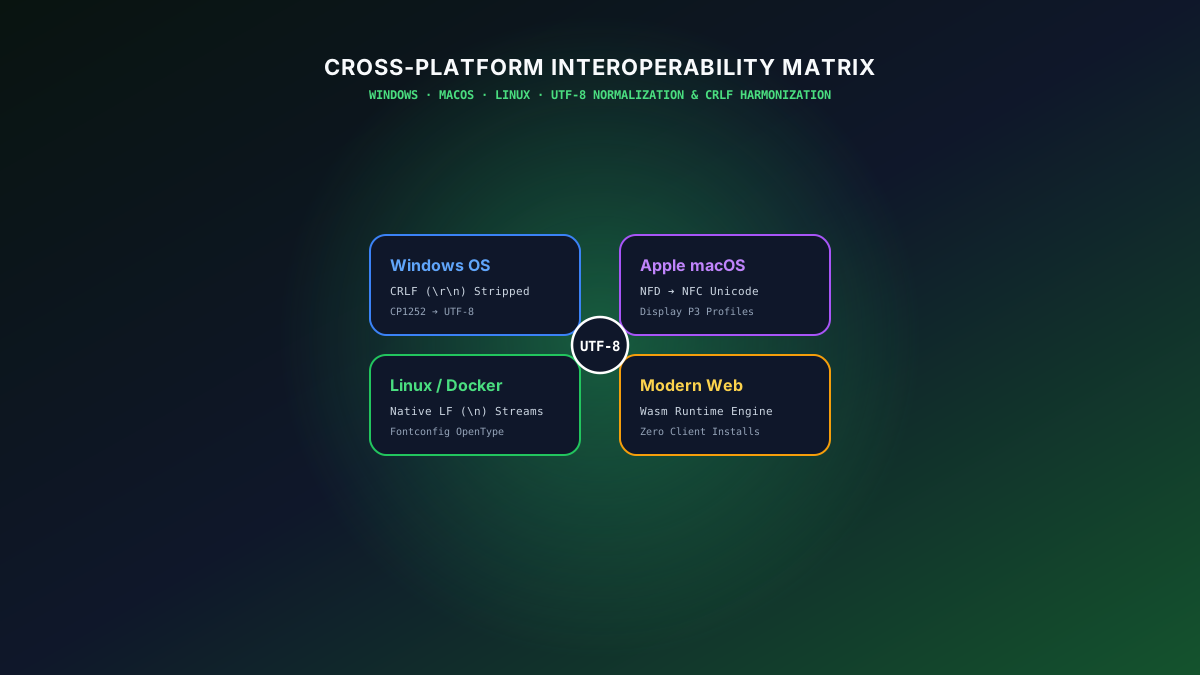
The Cross-Platform Interoperability Matrix: Solving Hidden Formatting Inconsistencies
A document created on Windows may render with broken line breaks on Linux or distorted font kerning on macOS. These subtle discrepancies stem from deep operating system differences in character encoding, line termination characters, font rendering engines, and filesystem path delimiters.
Cross-Platform Normalization Pipeline
Normalizes Windows CRLF (\r\n) and Unix LF (\n) line breaks to standard UTF-8 stream buffers.
Converts macOS NFD decomposed characters to standard NFC precomposed glyph strings.
Embeds universal OpenType metrics to prevent paragraph re-flow across heterogeneous OS viewers.
1. Unicode Canonical Decomposition (NFC vs NFD)
macOS filesystems use NFD (Canonical Decomposition), separating accented letters into two code points, whereas Windows and Linux use NFC (Canonical Composition). SwiftFileConvert normalizes all text streams to standard NFC UTF-8 during conversion.
Conclusion
Ensuring cross-platform compatibility prevents broken layouts, garbled text, and ensures that your files appear identical across every operating system.